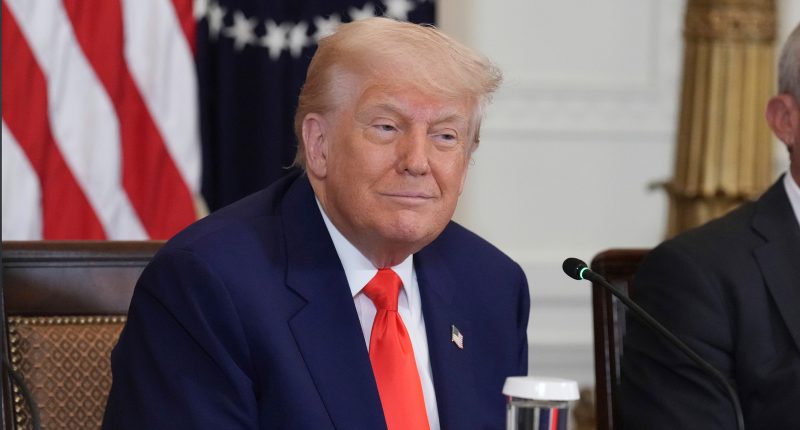
By Belize Live News Staff: This morning, U.S. President Donald Trump sparked international headlines by declaring his intent to slap a 50% tariff on all goods imported from the European Union beginning June 1, 2025. In a strongly worded social media post, Trump accused the EU of “trade abuse,” citing massive tariffs, lawsuits against American companies, and excessive trade restrictions that have created an annual $250 billion trade deficit with the United States. According to Trump, negotiations with European leaders have gone nowhere, prompting him to recommend this sweeping measure as a corrective action.

While many are focused on how this could affect the United States and Europe, the consequences for countries like Belize could quietly creep in through indirect channels. For one, Belize depends on both American and European imports for critical products and services. Disruptions or cost hikes in EU exports to the U.S. may force European suppliers to look elsewhere, potentially flooding smaller markets with redirected goods—or pricing them out of reach for developing economies.
Moreover, Belize’s reliance on trade partners like the U.S. means that supply chains could be rerouted or reprioritized, causing delays, price spikes, or bottlenecks. This is particularly relevant in sectors like agriculture, manufacturing, and retail. A major geopolitical rift could also have cascading effects on tourism, investment, and foreign aid—three areas where Belize maintains delicate ties with both American and European institutions.
It’s too soon to tell whether this proposed tariff will become law, but it serves as a reminder of how interconnected the global economy is. Even decisions made far beyond our borders can impact everything from the price of flour to the availability of farm equipment. For now, Belizean officials and the business community should brace for the possibility of a shifting global trade landscape.