By Belize Live News Staff: A bitter land dispute in Placencia has triggered a national conversation about beach access, community rights, and foreign development—just as Belize gears up for one of its biggest tourism events of the year.

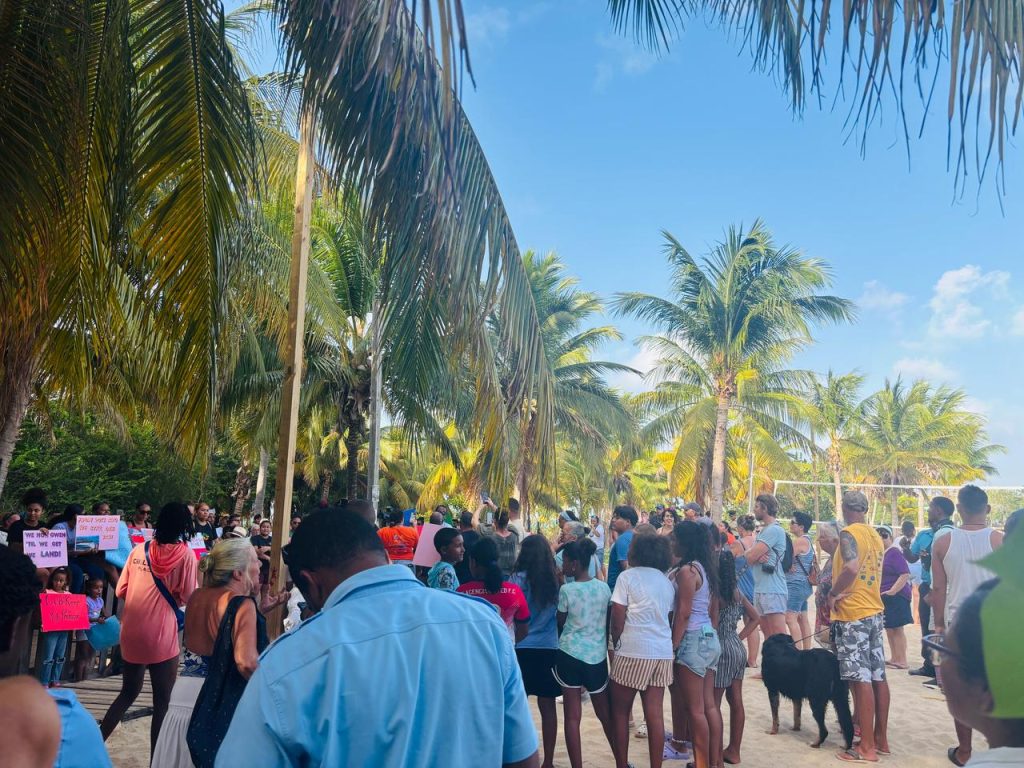
The fight centers around a small but culturally significant area known locally as “the Pint,” the only public-facing beach access point in Placencia Village. Once the heart of community life and the location for the annual Lobster Fest, the site now finds itself behind locked gates—claimed by a private owner who has formally asked the Placencia Village Council to vacate the property.
What was once an open boardwalk where locals and tourists mingled freely is now fenced off, with legal threats looming. And while the government previously signaled interest in acquiring the land through a compulsory process, that effort has stalled, with a critical six-week timeline now expired.
Village leaders say the delay is unacceptable.
“This isn’t about politics. This is about a community losing access to a place we’ve used for generations,” said Councillor Brice Dial. “The owner isn’t Belizean, and the land’s being treated like it’s up for auction to the highest bidder.”
The Ministry of Natural Resources has acknowledged that the government’s valuation of the property is significantly lower than the BZ$4.5 million claimed by the landowner, creating a standstill in negotiations. Despite that, villagers insist the process must move forward—whether through compensation, compromise, or legal force.
Local fisherman Eworth Garbutt said the issue highlights the broader erosion of public space in Belize’s prime tourism areas. “This is happening in Placencia today. Tomorrow it could be Caye Caulker or San Pedro,” he said. “We need to draw the line somewhere.”
As preparations for Lobster Fest hang in the balance, the village council vows not to step back. A scheduled follow-up meeting with the Ministry of Natural Resources is expected this week, but community members say they’re prepared to escalate their protest if no concrete progress is made.
The question now isn’t just about one plot of sand in Placencia. It’s about who gets to decide the future of public spaces in Belize—and whether local communities will continue to have a say.