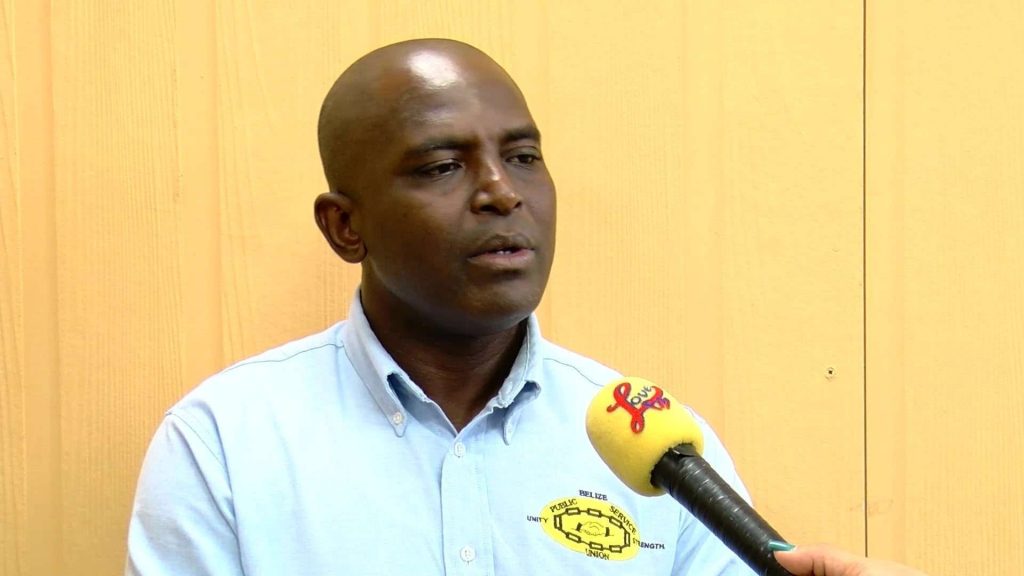
By Belize Live News Staff: As allegations surrounding government spending, procurement practices, and public accountability continue to dominate national conversations, Public Service Union President Dean Flowers believes Belize is missing one of the most effective tools in the fight against corruption: strong whistleblower protection laws.

Flowers is once again calling on the government to pass long-discussed whistleblower or protected disclosure legislation, arguing that many public officers possess firsthand knowledge of wrongdoing but are reluctant to come forward because they fear retaliation.
His argument raises an important question for Belize: How much corruption remains hidden because people are afraid to speak?
Across the world, whistleblower laws are designed to protect employees who report fraud, abuse of authority, corruption, financial misconduct, or violations of the law. In many countries, these protections have helped uncover major scandals involving governments, corporations, and public institutions.
Flowers argues that Belizean public officers often find themselves in a difficult position. They may witness questionable activities or receive instructions they believe are improper, but speaking out could place their careers, livelihoods, and professional reputations at risk.
Supporters of whistleblower legislation say legal protections would create a culture of accountability by allowing employees to report concerns through secure channels without fear of punishment.
Critics, however, sometimes argue that such laws can be abused if false or politically motivated accusations are made. For that reason, most modern whistleblower frameworks include safeguards requiring investigations and evidence before allegations are substantiated.
For Belize, the debate arrives at a time when transparency and accountability are increasingly becoming public concerns. Citizens are demanding greater oversight of public spending and stronger mechanisms to ensure taxpayer dollars are used appropriately.
Whether the government decides to move forward with protected disclosure legislation remains uncertain. What is clear is that the conversation about corruption, transparency, and accountability is not going away.
The bigger question may be whether Belize is prepared to give public servants the legal protection they need to become part of the solution.