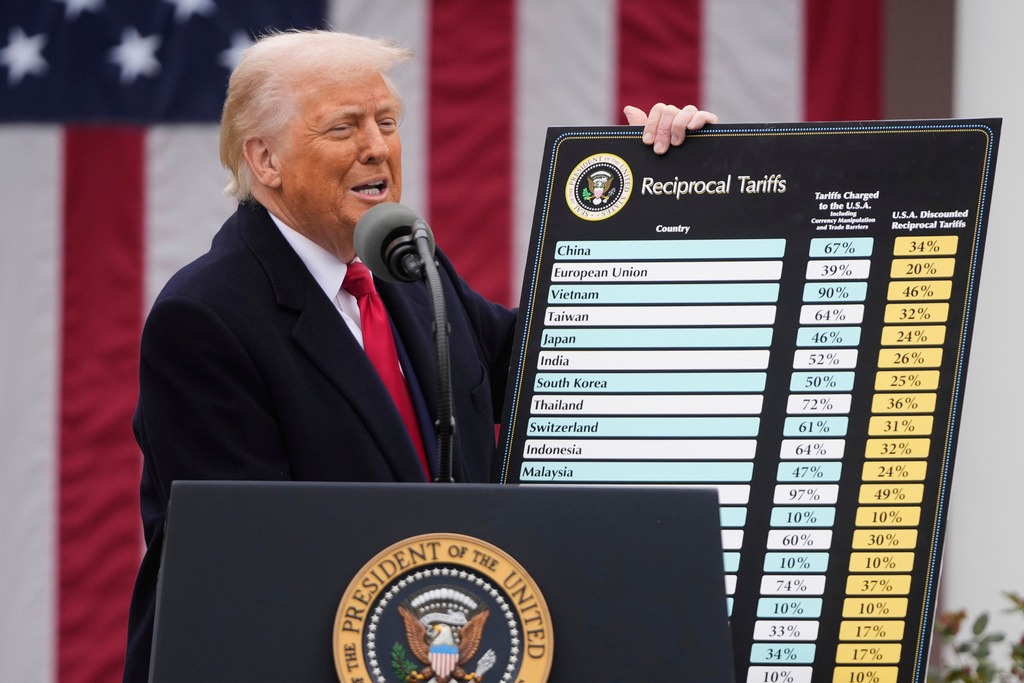
By Belize Live News Staff: The Trump administration’s new reciprocal tariff plan is set to shake up global trade relations. Under this policy, countries that impose tariffs of at least 10% on U.S. goods will now face equivalent—or sometimes higher—tariffs when exporting to the United States.

The plan is designed to address what President Trump called “unfair trade practices,” with the goal of leveling the playing field for American exporters. Countries like Iraq, which currently imposes an estimated 78% tariff rate on U.S. goods, would now face a 39% U.S. tariff, while the Falkland Islands would face a 41% reciprocal rate in response to their 82% tariffs on the U.S.
Smaller nations, including Belize, Tanzania, and Senegal, are also on the list, although their estimated tariffs against the U.S. are relatively modest—typically around 10%, prompting an equal 10% response from the U.S.
Critics argue that such a blanket approach might hurt diplomatic relations and impact smaller economies unfairly, especially those with limited export volume. However, proponents insist that the policy is necessary to protect American industries from lopsided trade deals.
With global supply chains already under pressure, the ripple effects of this plan could reach far beyond Washington. Countries now face a clear choice: lower their tariffs or risk higher costs when doing business with the world’s largest economy.