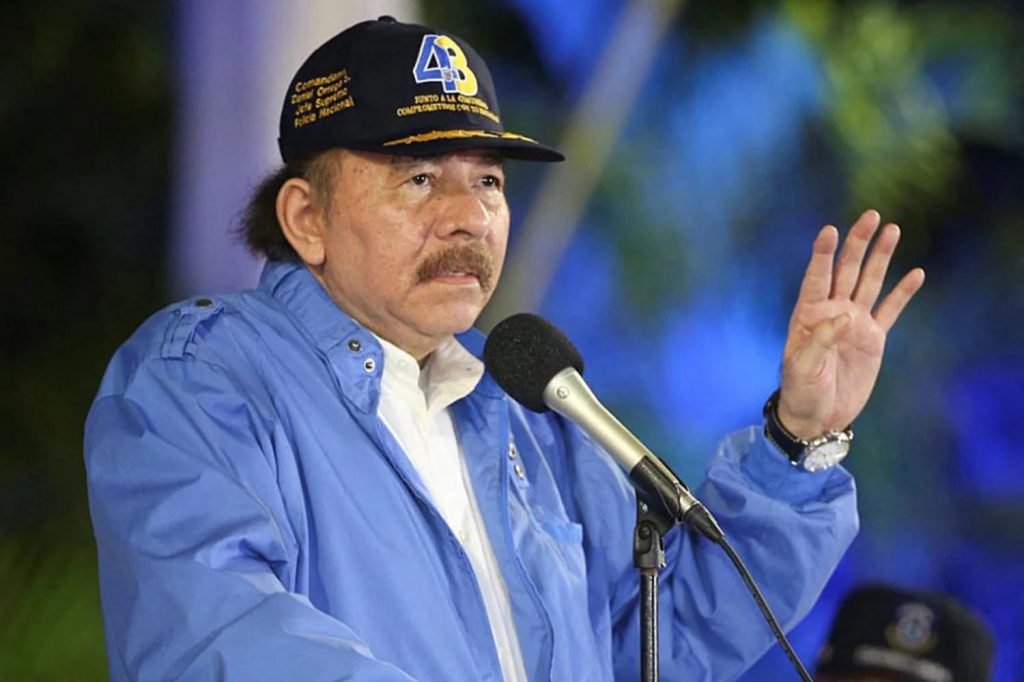
By Belize Live News Staff: Two countries down the isthmus from Belize, a president just told his people they will never vote for their leader again.

Daniel Ortega, Nicaragua’s 80-year-old ruler, announced Sunday evening that the country will no longer hold elections, according to international reports, cementing the power he shares with his wife and co-president, Rosario Murillo, beyond any challenge when his term ends next year. Speaking at a commemoration of the 1979 Sandinista revolution, in his first public appearance in two months, Ortega declared that “there won’t be any more elections here,” dismissing rival parties as tools of foreign interests, and offered no details on how the ban would work.
What died with that speech had been ailing for years. Ortega has ruled without interruption since 2007. His 2021 reelection was widely disputed after opponents were jailed and dissent criminalized. Constitutional changes last year installed Murillo as co-president, stretched the term to six years, and placed the armed forces and judiciary in the couple’s hands. The UN Human Rights Council has accused the government of building an authoritarian state, and the 2018 crackdown on protesters left more than 300 people dead. Washington has sanctioned over 2,350 Nicaraguan officials and their relatives.
The exiled opposition heard something other than strength in the announcement. “A confession of fear,” former presidential hopeful Felix Maradiaga, once jailed and later expelled to the United States, told Reuters. Analyst Tiziano Breda put it plainly, saying the couple chose to eliminate electoral competition altogether rather than rig another vote, calling Nicaragua a family-run dictatorship in full.
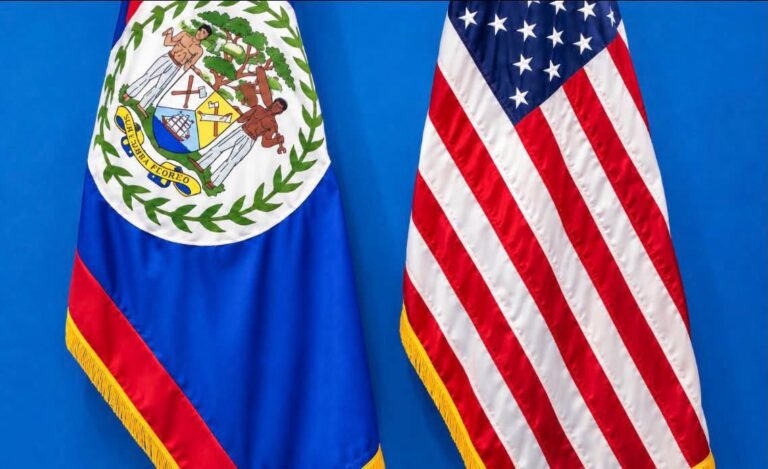
And Belize? This is our neighbourhood. Nicaragua shares membership with Belize in SICA, the Central American Integration System, the same forums, the same regional table. Yet the two countries now represent opposite ends of the democratic spectrum: Belize, where governments have changed hands peacefully at the ballot box since independence, and where a heated election season means rallies and radio wars, not prisons; and Nicaragua, where the ballot box has now been formally retired.
The ripples reach beyond principle. Nicaragua’s repression has already scattered its people across Central America, and a region with fewer democracies is a region with more instability, more migration pressure, and harder diplomacy for everyone, small democratic states like Belize included. Belmopan has said nothing yet, and likely will choose its words with the caution small nations must.
But Belizeans reading from home can draw the lesson without any official statement. The right to mark an X, to argue, to vote the government out and vote it back in, the ordinary machinery of Belizean life, just became extinct in a country two borders away. Democracy is not the regional default. It is a possession, and possessions must be kept.
What do you make of it, Belize? Should our government speak out on Nicaragua? Comment below.