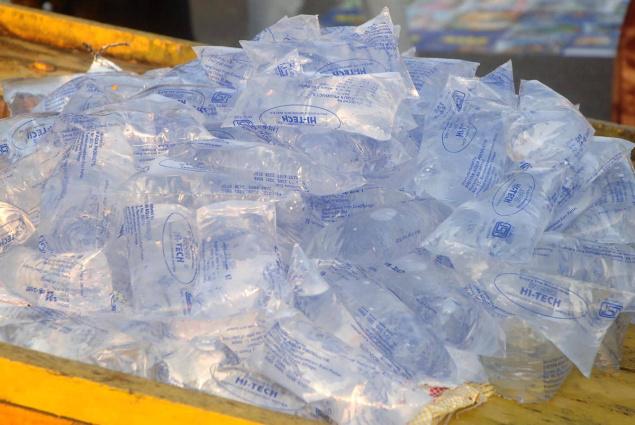
By Belize Live News Staff: They cost just a few cents, but according to a coalition of Belizean organizations, single-use water pouches are costing the country far more in the long run. Now, 37 local and national groups and businesses are calling for them to be phased out for good.

In a formal letter delivered to the Ministry of Sustainable Development, Climate Change and Solid Waste Management and the Department of the Environment, the coalition is urging the Government to create a transparent three-year transition plan to end the production, importation, distribution, and sale of single-use plastic water pouches, widely known as “shilling wata.”
The groups argue that the pouches have become one of the most common and stubborn forms of plastic pollution in Belize. They turn up on streets, school grounds, in drains and waterways, along beaches, and in marine ecosystems. Made from low-density plastic that cannot be recycled through current systems, they frequently slip past waste collection and linger in the environment.
For local agricultural consultant Alejandra Pedraza L., the issue is clear. She described the pouches as a symbol of the country’s growing plastic waste problem, noting that while they are cheap to buy, the environmental cost falls on communities, taxpayers, and future generations.
The proposal lays out a phased path forward. It would start with limits on government use and procurement of water pouches at official events, move to a ban in schools, and end with a full national ban within three years. The coalition says this targeted approach makes it easier to identify and shift to solutions than broad, sweeping bans.
Importantly, the organizations say practical alternatives are already within reach. Refillable water systems, refill stations, and reusable containers offer an affordable way to keep cool, clean drinking water flowing while slashing plastic waste. As Paulita Bennett-Martin of Sea of Life put it, rather than producing millions of disposable pouches each year, Belize can invest in systems that deliver safe drinking water while protecting its rivers, reefs, and communities.
The coalition pointed to other countries that have successfully banned similar products, and said Belize has a chance to lead the region on the issue. The groups also offered their support for public education and rollout efforts, signalling a willingness to work alongside the Government as the country transitions toward more sustainable drinking water solutions.